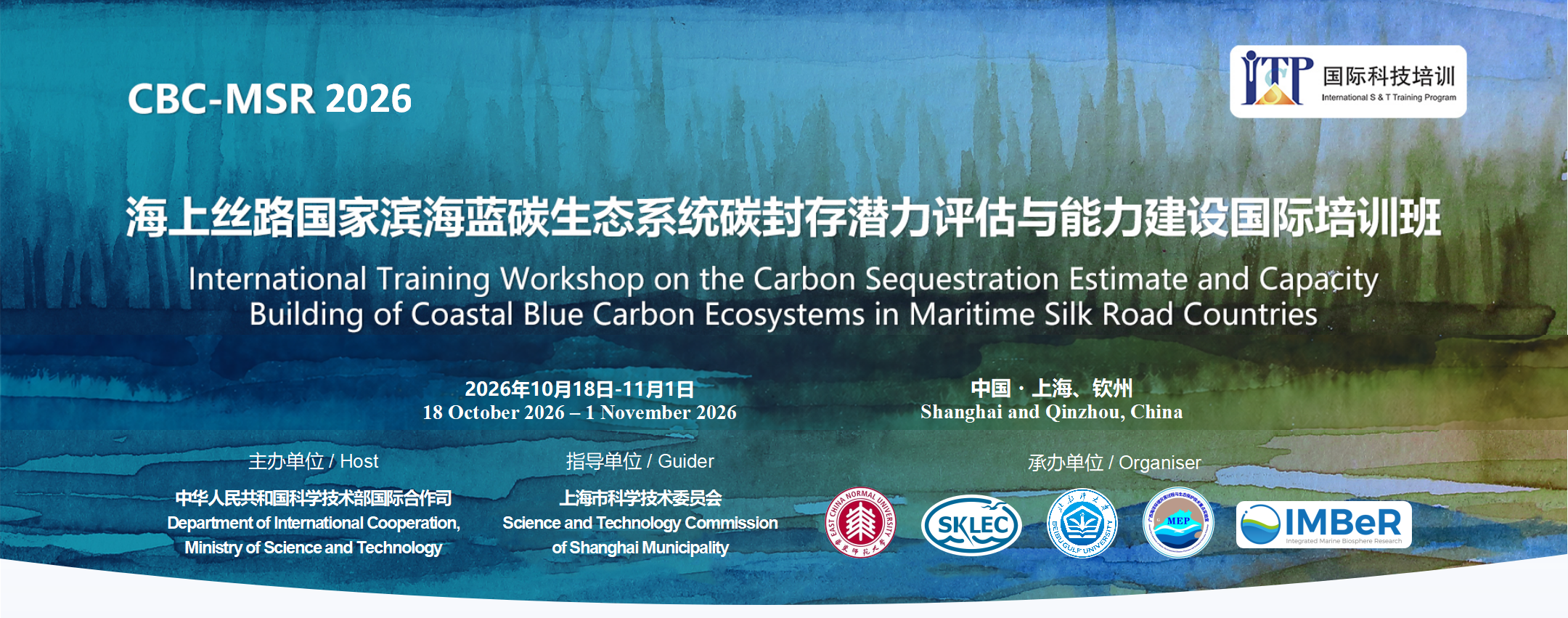
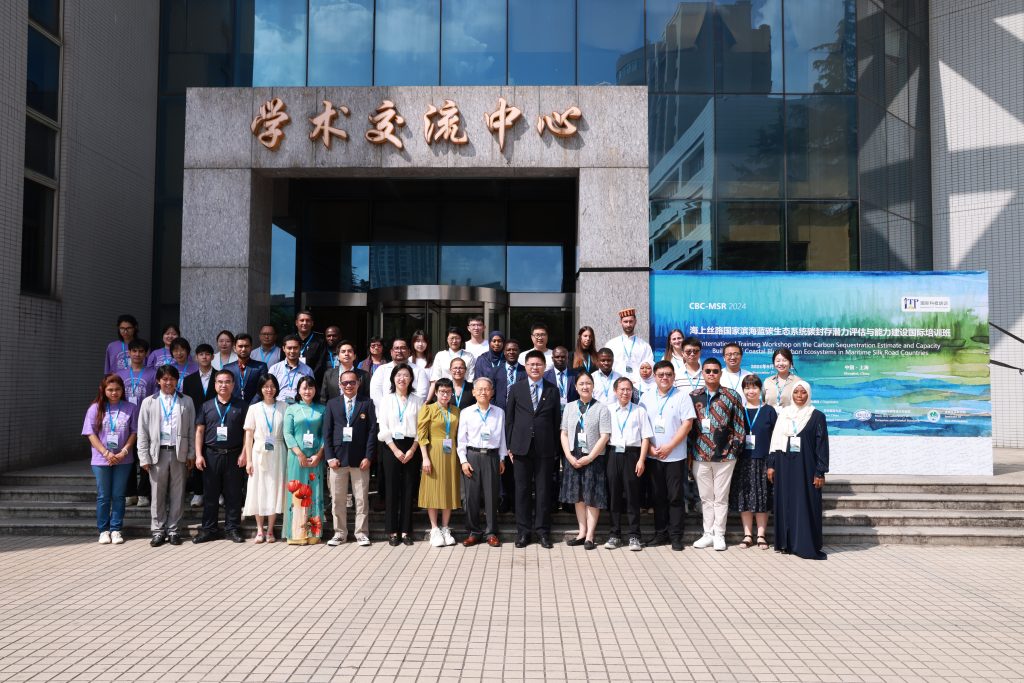
Second International Training Workshop on the Carbon Sequestration Estimate and Capacity Building of Coastal Blue Carbon Ecosystems in Maritime Silk Road Countries (CBC-MSR 2026)
Sponsored and guided by
Department of International Cooperation, Ministry of Science and Technology of the People’s Republic of China
Science and Technology Commission of Shanghai Municipality
Undertaken by
State Key Laboratory of Estuarine and Coastal Research, East China Normal University
Beibu Gulf University
Guangxi Key Laboratory of Marine Environmental Disaster Processes and Ecological Protection Technology
Integrated Marine Biosphere Research (IMBeR) International Project Office
Supported by
“Mega-Delta Programme “under the UN Decade of Ocean Science for Sustainable Development
“CROSS Coastz: Land-Ocean Interactions for Sustainable Coastal Development“” under the UN Decade of Sciences
Future Earth Coasts (FEC) International Project Office
China-EU Intergovernmental Science and Technology Cooperation Programme: China-EU research and innovation flagship cooperation project (C-BLUEs and BLUE Seas)
Shanghai Environment and Energy Exchange
East China Normal University Law School
Institute of Eco-Chongming, East China Normal University
(Continuously updated…)
中文通知
This training workshop has been endorsed as an official UN Ocean Decade Activity.
Objectives
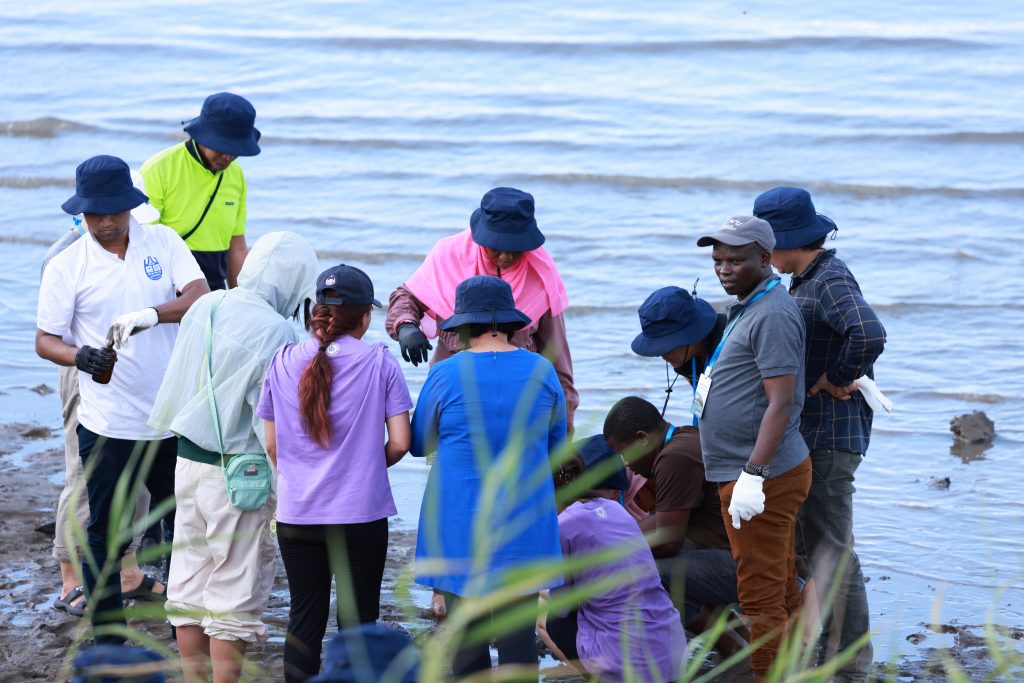
Coastal wetlands are crucial blue carbon ecosystems essential for achieving carbon neutrality amid global climate change. Since 2013, coastal wetland carbon sinks have been included in national greenhouse gas inventories, but many countries struggle with accurate carbon stock and greenhouse gas flux assessments due to limited training. To address this, the IMBeR International Project Office, in partnership with East China Normal University, is launching an international blue carbon capacity-building training. The course targets students and professionals from Maritime Silk Road countries, offering hands-on experience in field experiments, data collection, processing, and modeling. It also promotes innovation in developing low-cost, adaptable blue carbon monitoring technologies. This program aims to enhance coastal blue carbon ecosystem protection and restoration, contribute to the development of standardized carbon accounting and blue carbon trading systems, and support global climate governance and sustainable development through technical and human capacity development.
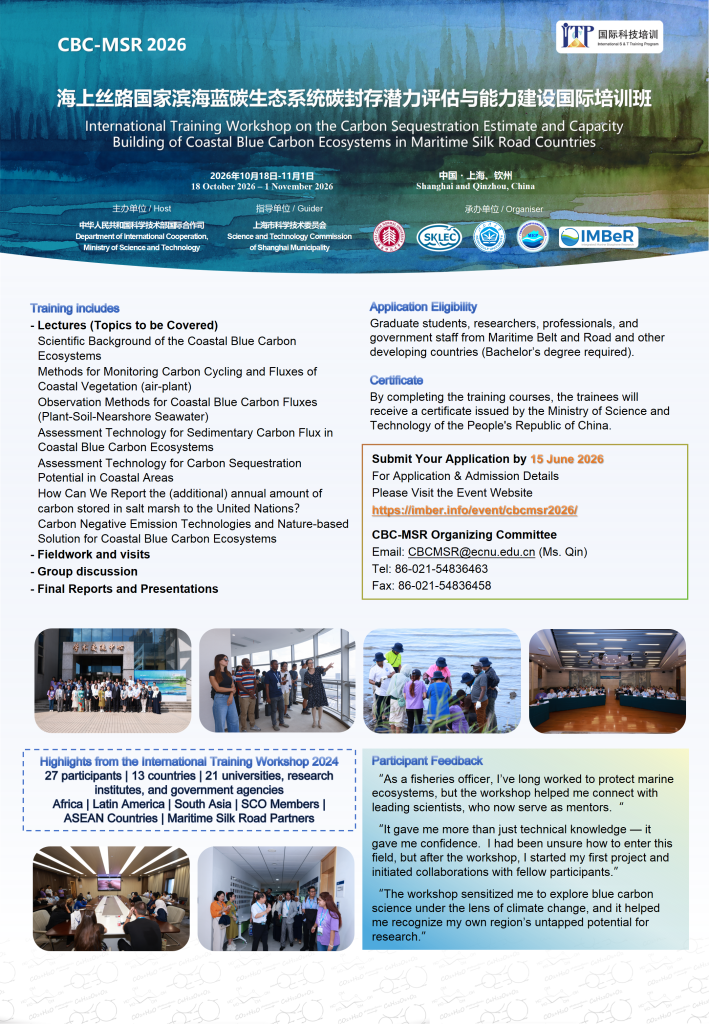
Training Includes
Lectures (Topics to be covered)
- Scientific Background of the Coastal Blue Carbon Ecosystems
- Methods for Monitoring Carbon Cycling and Fluxes of Coastal Vegetation (air-plant)
- Observation Methods for Coastal Blue Carbon Fluxes (Plant-Soil-Nearshore Seawater)
- Assessment Technology for Sedimentary Carbon Flux in Coastal Blue Carbon Ecosystems
- Assessment Technology for Carbon Sequestration Potential in Coastal Areas
- How Can We Report the (additional) annual amount of carbon stored in salt marsh to the United Nations?
- Carbon Negative Emission Technologies and Nature-based Solution for Coastal Blue Carbon Ecosystems
- Fieldwork and visits
- Group discussion
- Final reports and presentations
Application Eligibility
The organizers welcome marine and ecological graduate students and researchers, experts and technicians from enterprises and international organizations, and staff from government agencies, all based in the Maritime Belt and Road Program participating countries and other developing countries. Applicants must hold a Bachelor’s degree or an equivalent qualification. Additional participants supported by other funding sources are also welcome.
Travel and Accommodation Arrangements
Meals and lodging expenses in Shanghai and Qinzhou during the training workshop will be covered by the organizer at designated places. Trainees are responsible for their international travel, personal expenses, and medical expenses in Shanghai and Qinzhou. Trainees are responsible for their international travel. A limited number of international travel grants will be available by application.
Application and Admission New
Please complete an online application at https://mostitp.cistc.gov.cn/student_login.aspx and complete the accompanying questionnaire https://imber.info/machform/view.php?id=213432 —remember to upload your CV within the questionnaire—by 15 June 2026. Your application will only be considered complete after materials have been submitted through both systems. The review will be conducted concurrently with the application process until all trainee positions are filled.
The organizing committee will review applications, select 20 trainees, and send invitation letters no later than 24 June 2026.
Before the training workshop, each trainee must submit a report on Coastal Blue Carbon development in their country. In cases where there are multiple applicants from the same country, one participant will be assigned to complete this task.
By completing the training courses, the trainees will receive a certificate issued by the Ministry of Science and Technology of the People’s Republic of China.
Welcome to Shanghai & Qinzhou
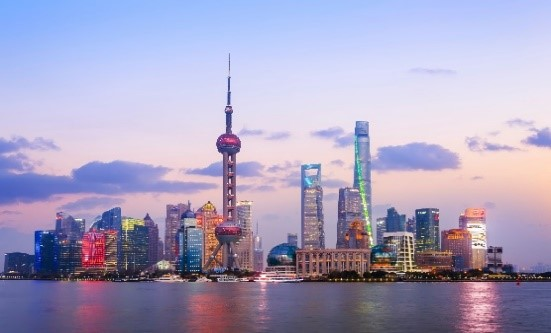
Shanghai City
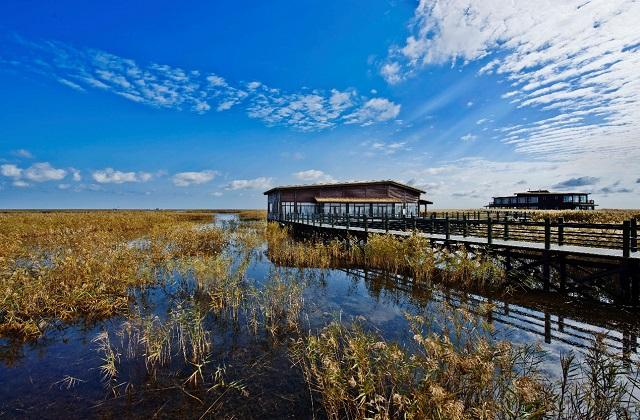
Dongtan National Nature Reserve
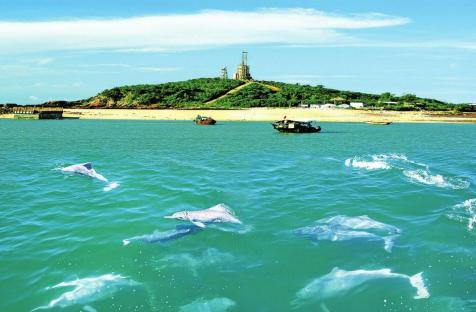
Qinzhou Sanniang Bay
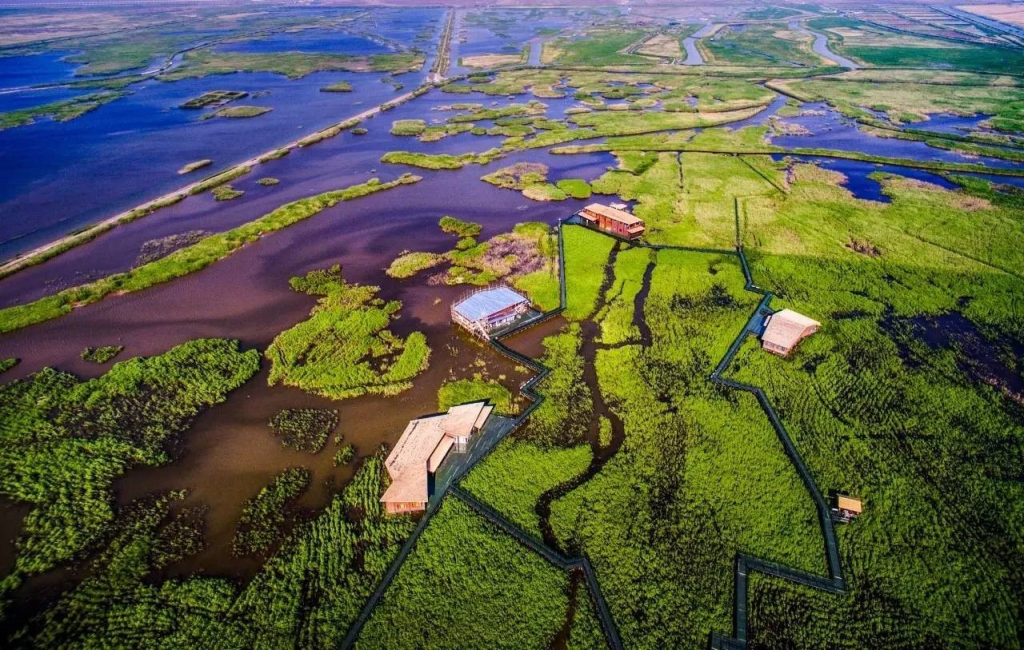
Dongtan Wetland Park
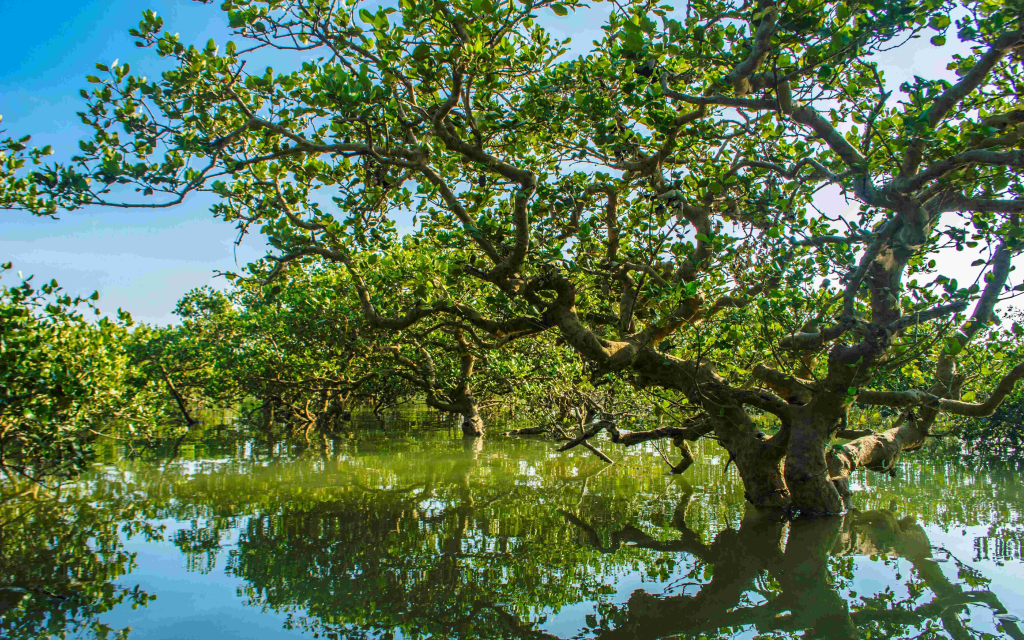
Qinzhou Bay Mangrove Wetlands
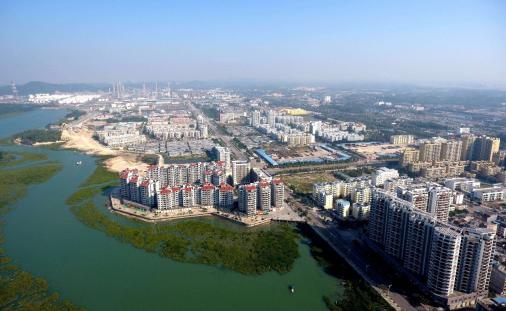
Qinzhou City
The vibrant city of Shanghai and Qinzhou extend a warm welcome. We believe you will be fascinated by their rich history, diverse culture, flavorful food, stunning architecture, friendly people, lush landscapes, and, most importantly, their dynamic energy.
Weather
The average daytime temperature in Shanghai in October is 23°C (73.4°F), and that in Qinzhou in October is 28°C (82.4°F). A pair of sunglasses and sun cream will be handy for the field courses.
Contact
CBC-MSR Organizing Committee
Email: CBCMSR@ecnu.edu.cn (Ms. Qin)
Tel: 86-021-54836463
Fax: 86-021-54836458
Related links
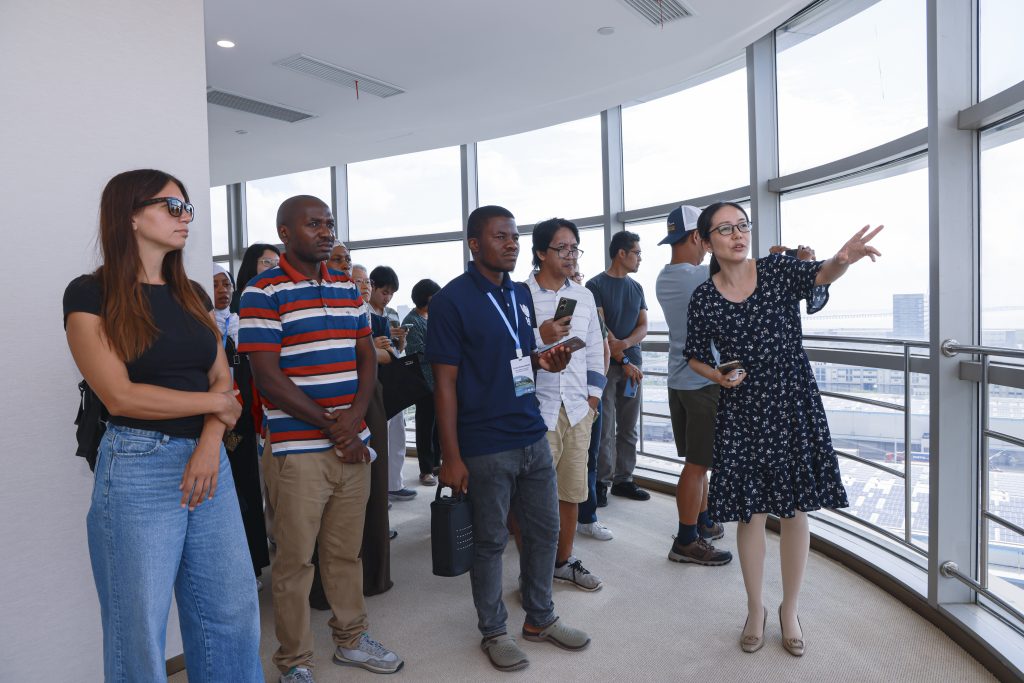
First CBC-MSR International Training Workshop 2024: https://imber.ecnu.edu.cn/1c/59/c35673a597081/page.htm
News
https://mp.weixin.qq.com/s/ZifikgUCbOdxojlmVmva2w
https://mp.weixin.qq.com/s/6HdWvDXPvSn3yknjZtmzcQ
Organizer